

RESOURCES: THE APOCALYPSE ALMANAC: survive, cure disease, and have fun doing it. FULLSCRIPT SUPPLEMENTS: Top quality, economical.
I was getting a crown on my new ceramic implant and discovered that my dentist had a chamber. I was once a PADI-certified scuba diver, and years ago, my residency program offered hyperbaric treatment for diving injuries on Catalina Island, so I took the specialty course there.
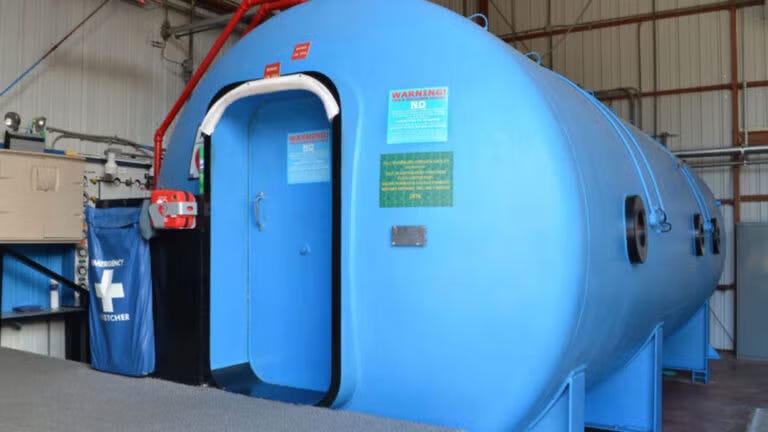
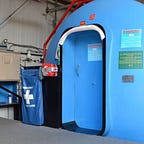
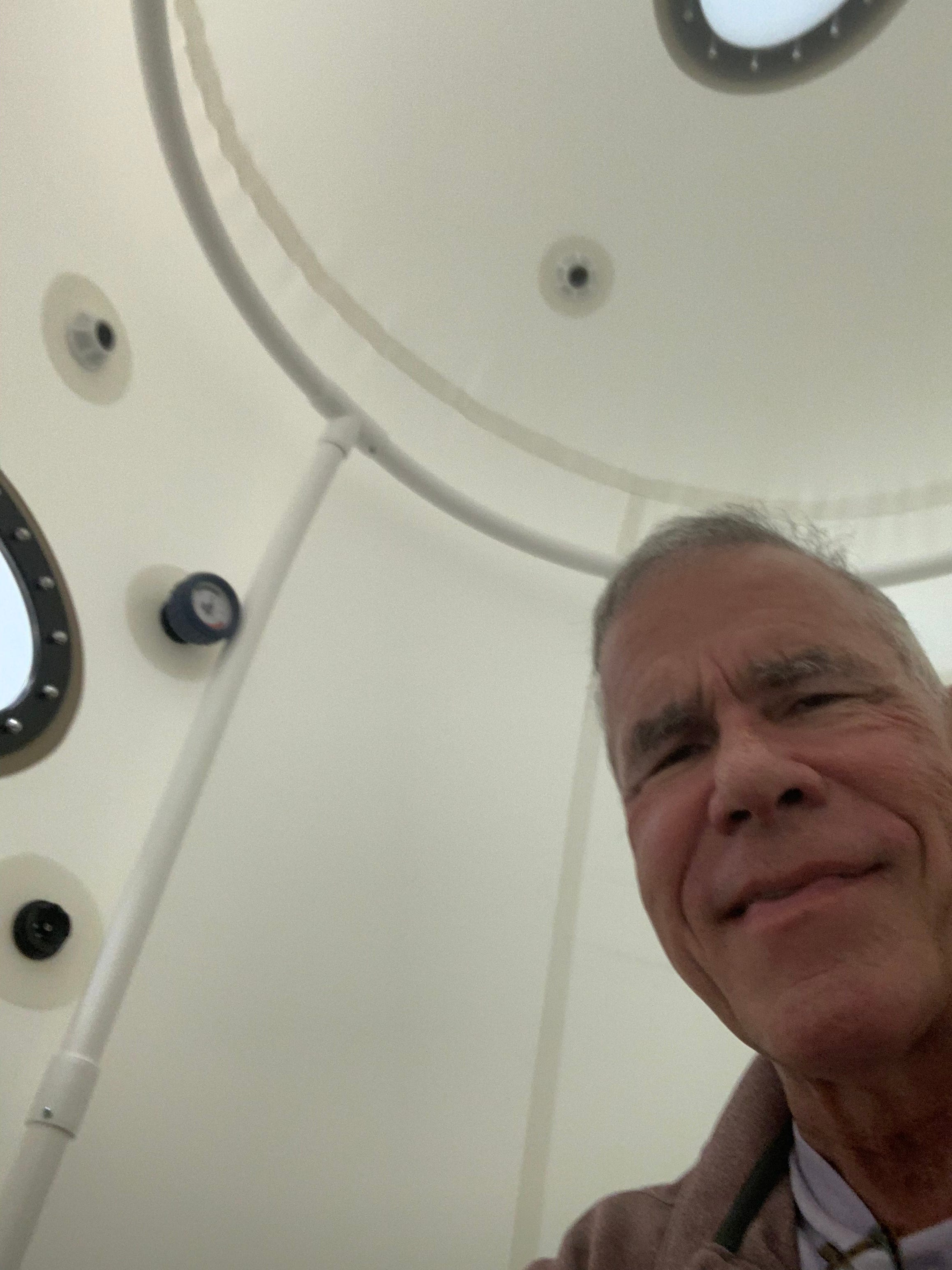
Later, I purchased a chamber and provided hyperbaric wound healing therapy while working as a cosmetic surgeon. A similarly sized one to the one I had is below, and yes, it was claustrophobic. Mine was only about 32 inches in diameter.
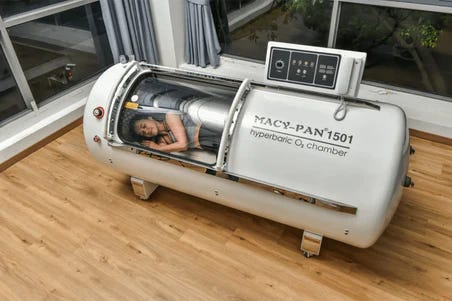
I decided to catch up with the field by writing this post. I read many fascinating stories, including some about the rare fires. (Spoiler: no one gets out of these alive.) Many medical conditions benefit from this treatment, and I thought you would appreciate learning about it.
All major US cities now have hyperbaric centers, and I found two biological dentists in the Los Angeles area who offer these services. For their contact information and more about them, please refer to the end of this post.
Hyperbaric oxygen therapy potentially delivers 100% oxygen at pressures from 1.5 to 3.0 atmospheres. (Sea level is one atmosphere.) This floods tissues with oxygen and can promote healing. The therapy shows potential for various brain disorders, though the evidence varies depending on the condition.
FDA-Approved Conditions
As of July 2021, the FDA cleared hyperbaric chambers for air or gas embolism, carbon monoxide poisoning, clostridial myositis (gas gangrene) and myonecrosis, crush injury, decompression sickness, arterial insufficiency, severe anemia, intracranial abscess, necrotizing soft tissue infections, osteomyelitis, delayed radiation injury, skin grafts and flaps, and thermal burns.
The FDA recently added sudden complete hearing loss and sudden painless vision loss from blood flow blockage. This expansion may lead to increased insurance coverage for these conditions.
The most common treated condition is chronic wounds, especially diabetic foot ulcers, which account for 60-70% of treated conditions. Also frequently treated are radiation damage to the jawbone, radiation injury to the bladder or rectum, and chronic bone infections. Decompression sickness and carbon monoxide poisoning, though less common, require immediate treatment. Crush injuries respond, and I have experience treating problematic surgical grafts and flaps, which are dusky or even black on the first postoperative day. Yoho comment: Whenever I saw that, I nearly wet my pants. This experience was part of the reason I got a chamber.
Off-Label Uses That Have Supporting Evidence
Recent research suggests benefits for traumatic brain injury, post-traumatic stress disorder, fibromyalgia, and post-stroke depression. Post-COVID conditions show particular promise. Yoho comment: This is from a reference, but it is “vaccine” damage. A randomized trial involving 73 patients found significant improvements in cognitive function, attention, and executive function after 40 sessions of hyperbaric oxygen therapy. A follow-up one year later showed that improvements persisted across most quality-of-life measures.
Autism, cerebral palsy, and multiple sclerosis have generated hyperbaric interest but lack substantial evidence. The FDA notes that hyperbaric devices are not proven to cure cancer, Lyme disease, autism, or Alzheimer’s disease.
Sports recovery and wellness applications are experiencing significant growth. Athletes utilize chambers to accelerate the healing process from injuries and enhance performance. These uses remain experimental and without rigorous clinical support.
Patients pay out-of-pocket for “off-label” uses, and insurance coverage is rare.
Long-Term Benefits After Treatment
Evidence for lasting benefits after completing treatment varies by condition. For post-vaccine damage (“long covid”) improvements persisted one year after 40 sessions of hyperbaric oxygen. Quality of life measures remained elevated for most measures.
Studies on Parkinson’s disease show sustained improvements in motor function, sleep quality, and cognitive measures for months after treatment ends. However, the studies did not follow patients long enough to determine if the benefits last for years or require maintenance sessions.
The wound-healing effects are permanent once the tissue has regenerated. Radiation injury treatment may require periodic sessions to maintain the benefits. No standard exists for maintenance therapy in neurological conditions.
History
In 1662, Dr. Nathan Henshaw invented a pressurized chamber for treating various conditions. The Brooklyn Bridge construction (1869-1883) provided some of the earliest knowledge about decompression sickness (the “bends”) and helped advance the understanding of hyperbaric medicine. Workers descended into massive pressurized underwater chambers to excavate the riverbed for the bridge’s foundations. Over 100 suffered from decompression sickness, at least three died, and the project’s chief engineer became permanently disabled.

The U.S. military’s research in the mid-20th century expanded the use of hyperbaric therapy for treating carbon monoxide poisoning and infections, leading to the formation of the Undersea and Hyperbaric Medical Society in 1967 and the establishment of modern safety standards for the therapy.
Prescription Requirements and Regulatory Status
Hyperbaric chambers are classified as Class II medical devices by the FDA. Both hard and soft chambers require a prescription from a physician (MD, DO, or DDS) to be purchased or used. This applies even to soft chambers bought for home use. Regulatory oversight varies by state, and enforcement of prescription requirements is inconsistent. Soft chambers have FDA clearance only for the treatment of acute mountain sickness, but are used off-label for other conditions.
Oxygen Concentrators and Legal Constraints
To control costs, oxygen masks are often used inside chambers instead of pressurizing the entire chamber with oxygen, and the percentage of oxygen a person breathes depends on the flow rate. At 10 liters per minute, the inspired oxygen reaches about 60%. Lower flow rates deliver less.
Anyone can purchase an oxygen concentrator without a prescription, although its medical use requires physician oversight. Concentrators produce 85-96% oxygen from room air, but 100% oxygen at 2-3 atmospheres is more desirable and what is recommended in approved hyperbaric protocols.
Using oxygen concentrators with soft chambers creates legal and safety gray areas. The FDA has not approved soft chambers for use with oxygen tanks or concentrators. Despite this, many soft chambers have oxygen masks and concentrators to boost the levels. This system is inferior therapeutically for many conditions, notably neurological ones, and it elevates the fire risk.
Treatment Settings and Safety Parameters
Since 1980, fires have been mainly caused by forbidden items that patients or staff brought into the chambers. Lighters, petroleum products, cosmetics, and fabrics that generate static electricity are prohibited. The FDA and manufacturers specify that no electronic devices are allowed in any hyperbaric chamber during operation. Cotton clothing is required because it resists melting onto skin during fires. Even pressurizing chambers with air increases the amount of oxygen inside, thereby raising the fire risk; however, every fatal chamber fire since 1923 has occurred in environments with more than 28% oxygen and an abundance of flammable materials.
In January 2025, a 5-year-old boy died when a hyperbaric chamber exploded at the Oxford Center in Troy, Michigan. Four people were charged with second-degree murder after investigators found safety protocols were ignored. In July 2025, a 43-year-old physical therapist died in a flash fire inside a hyperbaric chamber in Lake Havasu City, Arizona. These are the first U.S. hyperbaric chamber deaths in decades, breaking a long safety record in North America.
Parkinson’s disease shows benefit
Improvements in motor symptoms, sleep, and cognitive function have been reported in published studies. Treatment typically requires 2.0-2.5 atmospheres for 20-40 sessions.
A meta-analysis of 13 studies involving 958 patients found that those receiving hyperbaric oxygen therapy showed improved motor function scores, lower disease severity ratings, and better cognitive function compared to control groups. The treatment helped with anxiety, depression, thinking problems, sleep troubles, and swallowing difficulties.
The results extend beyond motor symptoms. Patients experienced improved sleep quality and reduced daytime drowsiness when hyperbaric oxygen therapy was combined with standard medications. Most studies used pressures ranging from 2.0 to 2.5 atmospheres for sessions lasting approximately one hour.
Research using mice exposed to 2.5 atmospheres of oxygen for one hour daily over seven days showed that the treatment promoted mitochondrial growth. Multiple human trials support these animal findings.
Severe acute traumatic brain injuries may benefit, but mild injuries and lingering concussion symptoms lack support. Claims that lower pressures work as well as standard protocols lack support from rigorous trials. Extensive controlled trials showed no benefit at 1.5 atmospheres compared to sham or no treatment.
Neurological conditions require medical-grade hard chambers at 2.0 atmospheres or higher for patients to benefit. While some research suggests that lower pressures may help, the best studies and all FDA-approved indications use 2.0 atmospheres or higher with 100% oxygen. Soft chambers at 1.3 atmospheres provide insufficient pressure and oxygen based on current evidence standards.
Patients seeking treatment for brain disorders often face limited access to facilities willing to provide care, for most U.S. facilities focus on wound care. This reflects economic incentives and the more substantial evidence.
Adverse Effects and Contraindications
The most commonly reported complication is temporary vision changes (nearsightedness) at 24.4%, followed by ear injury (14.9%) and anxiety from confinement (11.5%). Other risks include eye damage, lung collapse, low blood sugar, and sinus problems.
Oxygen toxicity can occur in rare cases, leading to seizures, lung fluid, or lung failure. Even breathing uncompressed pure oxygen for over 24 hours can cause this.
Sinus, dental, or lung barotrauma can also occur. The only absolute contraindication to hyperbaric treatment is an untreated pneumothorax. Recent ear surgery, colds, fever, and certain lung diseases require caution.
Brain Injury and Stroke Evidence Remains Unclear
Animal studies have shown that hyperbaric oxygen therapy for artificial stroke models reduces cell death in rat brain cells by transferring mitochondria from support cells to neurons. The protective effect was seen in both experimental stroke and traumatic brain injury. The therapy reduced brain swelling, prevented cell death, protected the blood-brain barrier, and promoted the growth of new blood vessels.
While research supports hyperbaric oxygen for severe acute traumatic brain injury, it does not appear to help mild brain injury. A 2022 review of eleven studies on persistent concussion symptoms found promising results, with optimal dosing appearing to be 40 sessions at 1.5 atmospheres. Patients with both concussion symptoms and stress disorders seemed to benefit the most.
Hard Chambers Versus Soft Chambers
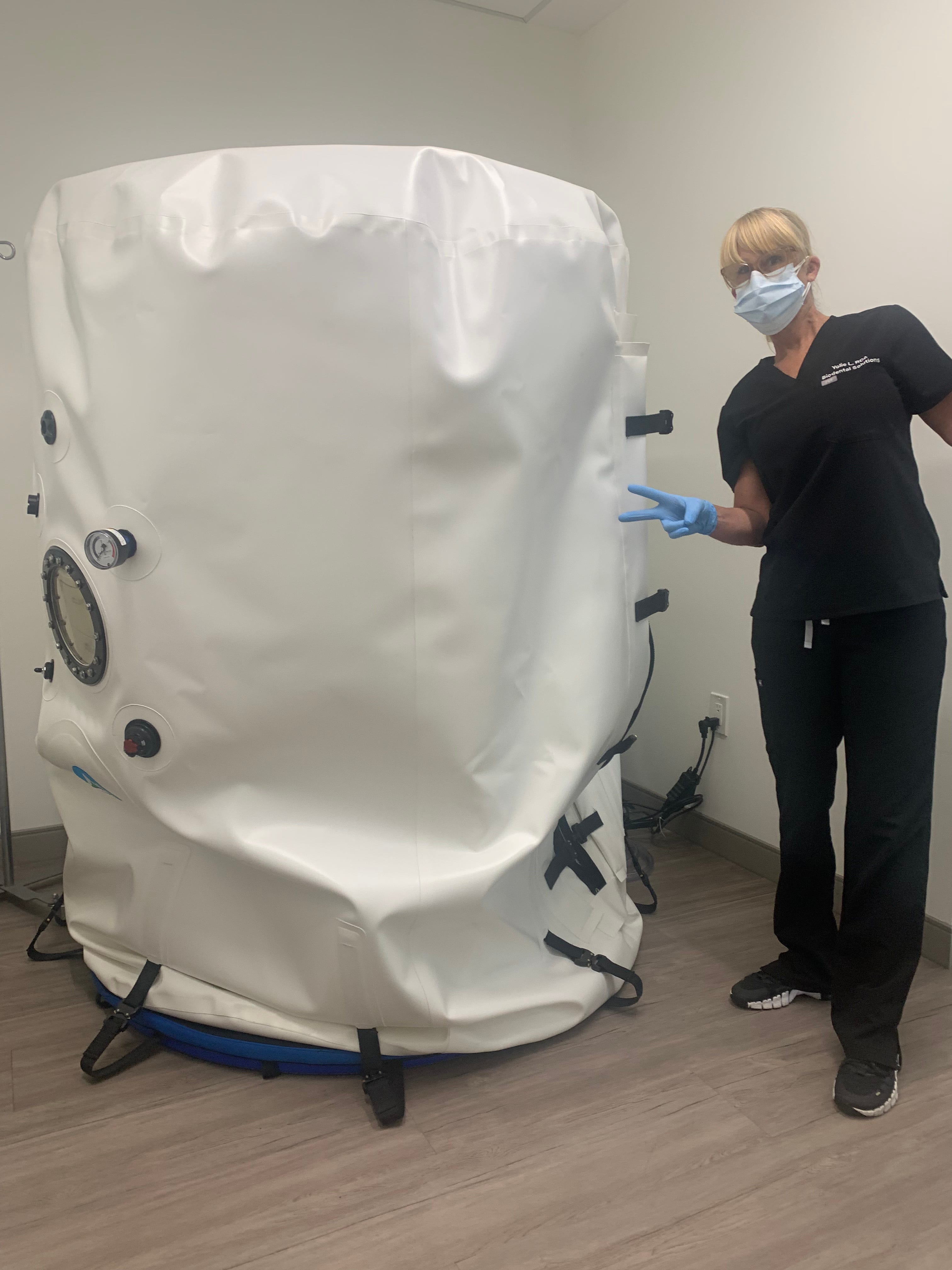
Soft chambers typically operate at 1.3 atmospheres and are considered mild hyperbaric therapy, whereas hard chambers reach pressures of 2.0 to 3.0 atmospheres or higher. Soft chambers deliver approximately 24% oxygen with room air, or up to 60% with the use of an oxygen concentrator. Hard chambers provide 100% oxygen.
Soft chambers are made from medical-grade, three-layer fabric with triple or penta-welded seams. Hard chambers are steel, aluminum, or acrylic with a rigid design that withstands pressures of up to 3 atmospheres. Hard chambers must meet PVHO-1 codes from the American Society of Mechanical Engineers and NFPA 99 health care safety standards.
Soft chambers cost $4,000 to $15,000, while hard chambers start at $20,000. Soft chambers fold for storage and set up in minutes. Hard chambers need dedicated rooms and professional installation.
The FDA recognizes soft chambers only as devices for treating altitude sickness during transport to medical facilities. At 1.3 atmospheres, soft chambers are unable to suppress bacterial growth, which requires a minimum of 1.5 atmospheres. They may even enhance the development of some molds, fungi, and bacteria.
Hard chambers at high pressures can dissolve up to nine times more oxygen into the blood than soft chambers with their lower pressures. All research showing hyperbaric benefit used pressures of 2.0 atmospheres or higher with 100% oxygen.
Hard chambers require nationally certified hyperbaric technicians who must be EMTs, nurses, physicians, or military medics. No such standards apply to soft chambers.
Commercial Use in the United States
Approximately 1,300 to 1,500 independent hyperbaric facilities operate in the United States, and only about 67 specialize in treating diving accidents. 1,800 to 2,000 hospitals offer hyperbaric treatments, in addition to 500 to 700 non-hospital clinics.
Medical facilities use mainly hard chambers. Exact numbers for fabric chambers in medical use are not published, but soft chambers are increasingly found in wellness centers, homes, and non-medical settings.
Consumer Costs and Package Pricing
Single hyperbaric oxygen sessions cost between $150 and $650, depending on the location and type of chamber. Hospital-based facilities charge $250 to $600 per session, while independent clinics charge $60 to $300. Medicare reimbursement to facilities is about $132 per session for approved conditions.
Package pricing reduces per-session costs. A 40-session package at an independent clinic may cost $100 to $150 per session when purchased upfront, totaling $4,000 to $6,000. Some clinics offer packages as low as $40 to $60 per session, but with significant commitments.
Hospital programs typically accept most insurance for FDA-approved conditions, but they often have high copays. Independent clinics may not accept insurance at all, especially for off-label uses. Medicare and Medicaid cover approved indications with 20% patient responsibility after deductibles are met.
Basic soft chambers for home use start around $4,000. Medical-grade hard monoplace chambers typically cost from $100,000 to $300,000. Large multiplace systems can exceed $1 million.
The Mild HBOT Controversy
The Undersea and Hyperbaric Medical Society defines hyperbaric oxygen as being at least 1.4 atmospheres, but some researchers claim that lower pressures are also effective. A debate rages over whether pressures below 1.5 atmospheres provide therapeutic benefit.
Proponents cite studies showing 1.3 atmospheres with room air improved symptoms in mild traumatic brain injury. A 2013 study found that 1.5 atmospheres had a more significant effect on inflammatory genes than 2.4 atmospheres. Research on cerebral palsy showed no difference between 1.3 atmospheres with room air, 1.5 atmospheres of oxygen, and 1.75 atmospheres of oxygen.
Studies at 1.25-1.3 atmospheres with 30-40% oxygen increased blood flow and resting energy use. Mild hyperbaric oxygen therapy at 1.4 atmospheres with 35-40% oxygen increased natural killer cell activity in healthy women. Even pressures as low as 1.04 atmospheres showed measurable effects.
Critics counter that controlled trials using 1.2 to 1.3 atmospheres as sham controls found no benefit over no treatment. A VA study (HOPPS trial) found neither 1.5 atmospheres nor 1.2 atmospheres improved concussion symptoms better than no chamber at all.
Most mild hyperbaric research evaluated conditions other than brain injury. Trials showing benefit at low pressures involved toxic brain damage, autism, cerebrovascular injury, epilepsy, or migraine. Whether these results apply to Parkinson’s disease or other neurological conditions is unclear.
The Undersea and Hyperbaric Medical Society maintains that approved indications require a minimum of two atmospheres, with nearly 100% oxygen. All research showing benefit for FDA-approved conditions used these parameters. Pressures below 2.0 atmospheres yielded less consistent results. However, a higher risk of adverse effects was observed at pressures of 2.0 atmospheres and above in meta-analyses.
Synthesis
I have no experience in using hyperbarics to treat conditions other than wound healing. During the years I operated my chamber, my impression was that its effects were mild to moderate. There is no doubt, however, that if you are not claustrophobic or prone to ear pain, even low-compression fabric chambers make people feel great. So I plan to do three treatments of 2 hours at 2 or 2.5 atmospheres with high oxygen and see how I feel. Driving to a hyperbaric center and paying for all those treatments might be reasonable if there were no other options for my Parkinson’s. Fortunately, I have many promising avenues to pursue.
References
1. Hadanny A, Efrati S. The hyperoxic-hypoxic paradox. Biomolecules. 2020;10(6):958. [Comprehensive review of hyperbaric oxygen mechanisms and neuroplasticity effects]
2. Pan Z, Tan W, Ran X, Yan M, Xie F. Effect of hyperbaric oxygen therapy for non-motor symptoms among patients with Parkinson’s disease: A systematic review and meta-analysis. Clin Rehabil. 2025;39(3):281-294. [Meta-analysis showing improvements in anxiety, depression, cognitive function, and sleep in Parkinson’s patients]
3. Bu S, Liu W, Sheng X, Jin L, Zhao Q. Hyperbaric oxygen therapy improves motor symptoms, sleep, and cognitive dysfunctions in Parkinson’s disease. Dement Geriatr Cogn Disord. 2025;54(3):187-200. [Analysis of 13 studies with 958 participants demonstrating motor and cognitive benefits]
4. Lippert T, Borlongan CV. Prophylactic treatment with hyperbaric oxygen mitigates the inflammatory response via mitochondrial transfer. CNS Neurosci Ther. 2019;25(8):815-823. [Animal study showing hyperbaric preconditioning reduces cell death through mitochondrial transfer]
5. Hu Q, Manaenko A, Xu T, Guo Z, Tang J, Zhang JH. Hyperbaric oxygen therapy for traumatic brain injury: Bench-to-bedside. Med Gas Res. 2016;6(2):102-110. [Review of experimental and clinical evidence for traumatic brain injury treatment]
6. Miller RS, Weaver LK, Bahraini N, Churchill S, Price RC, Skiba V, et al. Effects of hyperbaric oxygen on symptoms and quality of life among service members with persistent postconcussion symptoms: A randomized clinical trial. JAMA Intern Med. 2015;175(1):43-52. [HOPPS trial showing no benefit of 1.5 ATA over sham or no treatment for concussion]
7. Hadanny A, Zilberman-Itskovich S, Catalogna M, et al. Long-term outcomes of hyperbaric oxygen therapy in post-COVID condition: longitudinal follow-up of a randomized controlled trial. Sci Rep. 2024;14:3604. [One-year follow-up showing sustained improvements in post-COVID cognitive symptoms]
8. Laspro M, Wei LW, Brydges HT, Gorenstein SA, Huang ET, Chiu ES. Hyperbaric oxygen therapy regimens, treated conditions, and adverse effect profile: an Undersea and Hyperbaric Medical Society survey study. Undersea Hyperb Med. 2024;51(4):369-376. [Survey of 265 practitioners on pressure protocols and adverse effects]
9. Thom SR. Hyperbaric oxygen: its mechanisms and efficacy. Plast Reconstr Surg. 2011;127 Suppl 1:131S-141S. [Comprehensive review of mechanisms, including anti-inflammatory effects and angiogenesis]
10. Sheffield PJ, Desautels DA. Hyperbaric and hypobaric chamber fires: a 73-year analysis. Undersea Hyperb Med. 1997;24(3):153-164. [Historical analysis of chamber fires showing all fatal fires occurred in >28% oxygen environments with abundant combustibles]
Dentists with chambers in Los Angeles.
David Son, DDS, owns the soft chamber depicted above. He understands the entirety of Judas Dentistry and does everything right as far as I can see. He has a cone beam X-ray that enables him to see abscesses and other dental problems. He does a complete head and neck exam and has found dozens of squamous cell cancers and saved his patients’ lives when he referred them. He was trained by and uses ceramic implants from an advanced group in Switzerland.
He cannot do huge cases like my wife Judy needed because he solely uses local anesthetic, and it would be toxic. For big procedures, I recommend my maxilofacial surgeon in Spain, whom you can access through Becky Dutton at beckydutton@mercurymadness.org. The other problem with Dr. Son for me was that I had to drive nearly two hours each way from LA to Irvine through seven-lane, jammed traffic.
I have spent my entire career observing doctors in their offices, and my recommendation of Dr. Son is based on all this experience. He is a very good dude, and I am trying to get him to do a podcast with me. He has a fascinating backstory and reads Surviving Healthcare, so please encourage him in the comments if you'd like to hear him speak about how he became one of the good guys.
The other local resource is mysmilebody.com, a dental/medical group in Santa Clarita. I went out there to have an oligoscan to follow up on one that Dr. Tamara did 18 months ago. (I will post about how these scans are used soon.) I found a starship of an office with some unbelievably sophisticated staff. They sent me the Root Cause video from Rumble in my introductory email, indicating they were fully aware of the evils of root canals. If you have not seen this, stop now and watch it. Parkinson’s requires a hard shell hyperbaric chamber with oxygen and higher pressures, so I am going to Smile Body soon for a few treatments to see how I respond. Yes, they, too, have a chamber.
You have to be careful of dental charges, and I heard a story of someone who paid $250,000 for four ceramic implants here in California. Dr. Son is not cheap, but paying $3,500 for expertise like his to put a ceramic crown on my ceramic post, which was placed in Spain, is a bargain. I am not familiar with Smile Body’s charges, but after spending time in their office, I am confident they know what they are doing.
A final note: Read Judas Dentistry.
If you have, you know that little of the dental industry can be trusted. Mercury, root canals, and fluoride ruin their patients’ health—and these are what old-wave dentists do most. Fluoride products are commonly used in conjunction with dental appliances, particularly orthodontic appliances such as braces.
If you do not know now that aluminum is terrible for you, read my posts HERE and HERE. While modern ceramic implants are primarily made from zirconia (zirconium dioxide), not all ceramic implants are aluminum-free. An analysis of commercial zirconia dental implants found that all investigated samples contained various impurities and contamination, including aluminum, even when marketed as “metal-free.” Some manufacturers use significant amounts of aluminum as a chemical substitute, and some do not even mention the presence of this element in their implants.
While the amount of aluminum in these implants is small, if you are allergic to it, you may need to have it all removed—if you ever determine what caused the reaction.


