

READER RESOURCES: THE APOCALYPSE ALMANAC: Hidden cures in our dystopian age. FULLSCRIPT SUPPLEMENTS: top quality and economical.
Summary
Outstanding writing is essential, and poor writing is ignored, no matter how good the content.
Grammarly’s paid desktop version catches most usage errors, including subject-verb disagreement, missing possessive pronouns, and misplaced commas. Use it continuously every moment you write.
Eliminate pretentious language and wordy phrases. Replace “represent” with “is,” “utilize” with “use,” and delete idiocy like “it should be noted.”
Rewriting is the only path to excellence. Most competent book-length work requires 10 to even 50 drafts. Blog posts need at least 3 to 5 drafts.
Eliminate all redundancy. Do not go overboard restating the whole essay’s premises in your conclusion. Rather, synthesize your findings.
Generally, keep essays around 2500 words. Longer pieces sometimes lose readers, and shorter ones may feel incomplete. As you acquire expertise, you may violate these maxims.
Many great authors write simply. You should target a reading level between 7th and 10th grade. Elementary prose reaches the most people.
Delete 95 to 99 percent of adverbs.
Substack is the best platform for independent writers. It is uncensored, easy to use, and promotes direct reader relationships.
Introduction
The harsh reality of the written word is that if you have important ideas but cannot articulate them, people will ignore you. No matter how brilliant your thinking, poor prose dooms you to obscurity. Clear, powerful writing amplifies your message and potentially reaches thousands, or even millions, of readers.
Learning to write takes years, but the rewards are substantial. Writers develop clarity of thought. They influence culture and build communities. The process is challenging but accessible to anyone willing to work.
This guide combines my writing experience and key references into practical advice. It covers the basics of strong prose, explains why writing matters, and shows how to build an audience using Substack.
Why Writing Matters
Writing scales infinitely and is the most powerful tool for spreading ideas. A single essay can reach millions of people across decades. Unlike speaking, excellent writing can endure and leave a lasting impact.
Writing clarifies thinking and forces precision. Vague ideas collapse under scrutiny. Strong arguments emerge as we put disciplined words on the page.
Strong writers build authority and influence, and people trust those who can articulate complex ideas. A reputation for clear thinking opens doors.
Writing creates community. Readers who resonate with your perspective become a tribe. They support you, amplify your work, and contribute their own insights. Such a network can be invaluable.
The Essential Principles
Your “Voice” Is Your Greatest Asset
Readers want to know where you are coming from. They want your perspective, your experiences, and your transparent reactions to events. Writing without a distinct voice is dry and bores readers.
Somewhat informal styles work best for most purposes. Share relevant personal experiences and let your personality show. When appropriate, you may use the first person. Readers connect with humans, not with faceless authorities.
This does not mean making yourself the center of every story. It means writing in your own voice rather than as a generic expert.
Grammar and Conventions Are Non-Negotiable
Perfect grammar matters. Readers lose confidence in authors who make basic errors and write in a hard-to-follow style.
Grammarly catches the most common grammar mistakes. It identifies subject-verb disagreement, missing possessive pronouns, comma errors, and awkward phrasing. These errors make sentences confusing and force readers to reread passages.
Grammarly also functions as a tutor, highlighting errors and explaining corrections. Over time, these lessons sink in, and your mistakes will decline.
Some rules require conscious attention. Include all necessary relative pronouns like “that,” “which,” and “who” after reporting verbs. Read sentences aloud to catch missing articles and unnatural prepositions. If a sentence or paragraph sounds choppy or awkward when spoken, it needs revision.
Always use the serial (“Oxford”) comma in lists of three or more items. This prevents ambiguity and confusion. Format all numbers, statistics, ages, and measurements as numerals rather than spelling them out. These conventions make prose clearer and more professional.
Modesty Matters More Than Most Authors Realize
Arrogance repels readers, and egotism is unforgivable in print. If you lack natural humility, fake it. The alternative is an empty audience.
Writing to impress people backfires every time. Instead, write to serve readers. Guide them through complex concepts. Clarify confusion. Simplify complexity. A servant’s mindset produces the best work.
Avoid academic posturing and pretentious language. Young writers on the internet commit this sin continuously—they use obscure words, archaic phrases, and needless complexity to demonstrate their intelligence. This strategy fails—clear, straightforward prose requires more skill and is the higher art.
Pretentious and Wordy Language
Certain words and phrases signal insecurity masked as sophistication. They pad sentences without contributing meaning. Delete them ruthlessly.
Internal commentary weakens writing. Never use “it might be noted,” “I note that,” “it must be noted,” “I advocate for,” “I believe,” “this detailed account provides,” or “the text says.” Avoid “interestingly” and “quite noteworthy.” Let your messages speak for themselves. These phrases add nothing.
Bad transitions clutter prose when connections are obvious. Delete “in addition to,” “furthermore,” “moreover,” and “as mentioned previously.” If the logic flows properly, these crutches are unnecessary.
Business jargon and academic language burden readers. Replace “paradigm shift” with specific descriptions of change. Delete “moving forward” entirely. Change “utilize” to “use” and “implement” to “put in place” or “start.” These simpler words communicate better.
Certain verbs are chronic offenders. Replace “represent” and “represents” with “is” or “are” in nearly every case. Change “constitutes” to “is” or “makes up.” Replace “manifests as” with “appears as” or “is.” These single-word substitutions strengthen prose.
Latin phrases and legal terminology confuse readers. Use everyday English instead. Never use “thereof,” “hithertofore,” or other archaic constructions. The rare exceptions are widely understood terms like “per capita” or “status quo,” but even these should be used sparingly.
Rewriting
This separates mediocre writers from excellent ones. First drafts are always bad. Second drafts are usually inadequate. Excellence emerges only after iteration.
For the best quality, books require 10 to 50 drafts and blog posts three to four. This is not an exaggeration. Writers who have been thinking about a subject for years may need fewer passes, but beginners need more. Either way, revisions are essential.
Write a complete first draft, then rearrange words within sentences, sentences within paragraphs, and paragraphs and sections within the overall structure. Revise titles and headings repeatedly. Read the entire piece aloud for the final polish.
“Kill your darlings” is famous advice that means cutting anything that does not fit perfectly with the rest of the work, no matter how much you like it. Beautiful phrases that distract from the main point must go, and clever turns of phrase that muddy clarity must be deleted. Every sentence earns its place by serving the overall argument.
Rarely repeat the same point using different words. State each idea once, and provide evidence if needed. Redundancy bores readers and wastes their time. A final pass dedicated solely to finding and removing repeated ideas improves every piece of writing.
Structure determines communication success. Readers must flow from one point to another without stumbling. If they hesitate or get confused, they leave. Perfect structure comes only from ruthless reorganization during revision.
Practical Guidelines
Length and Reading Level
Although some writers can break this rule, most essays should be about 2500 to 3000 words. Shorter pieces may feel incomplete, and longer ones may lose some readers.
Targeting a 7th to 10th-grade reading level is a superpower. Check this using free online tools that analyze grade level. Many of the greatest authors wrote at elementary grade levels. Simple prose reaches the broadest audience.
Paragraphs should contain five sentences or fewer. This rule is firm but not absolute. One-sentence paragraphs work perfectly well in many contexts.
Adverbs and adjectives
Delete 95 to 99 percent of adverbs. Words like “very,” “really,” “quite,” “actually,” “virtually,” “completely,” “truly,” “extremely,” “incredibly,” “particularly,” and “especially” weaken prose. They inflate sentences without adding substance. If you cannot write without them, you need more practice.
A few precision adverbs potentially add measurable or meaningful information about the degree. Terms like “substantially,” “significantly,” “dramatically,” “moderately,” and “extensively” have a place in some scientific or analytical writing. They convey specific magnitudes, but should be mostly cut from other prose.
The test is simple. If the adverb adds measurable information, consider keeping it. If it just inflates weak writing, delete it. “The drug significantly reduced symptoms” works because “significantly” conveys magnitude. “It is extremely improbable” fails because “extremely” adds nothing to “improbable.”
Adjectives are a related case. Your goal is to convince the reader with facts and logic, not by using descriptive terms. Limit your adjectives.
Active Voice
In active voice, the subject performs the action of the verb: “The dog chased the cat.” In passive voice, the subject receives the action of the verb: “The cat was chased by the dog.” Study this concept online until you master it.
Use the active voice whenever possible, but don’t be afraid to violate this rule. Passive voice has limited uses, primarily in nonfiction, where attribution matters. Fiction writers should eliminate it, and nonfiction writers should use it sparingly.
Sentences and Style
Make sentences as short as possible without creating choppy prose, and cut long ones up aggressively. Throw in an occasional, more extended, more complex sentence to vary the rhythm. Some writing programs provide feedback on sentence length.
Avoid parentheses except in rare cases. Full-time writers use them every other month or not at all. Write around them instead.
Use “I thought,” “it seemed to me,” or “I found” rarely, if at all. Readers already know you are the author. These phrases waste words.
Tools and Resources
Essential Software
Grammarly’s paid version is essential. It catches grammar errors, suggests improvements, and teaches proper usage through repeated corrections. When you refine your prose this way, it is far easier to read or to narrate. Use the desktop version continuously on everything you write. Its newer versions improve entire paragraphs.
Scrivener is the best program for book-length work. It has superior autocorrect, makes moving chapters easy, and automatically backs up your job. If you write books without it, you waste a quarter of your time.
Microsoft Word remains useful for drafting, collaboration, and compatibility. Google Docs works well for web publishing and has built-in sharing features. Both programs have a place on your computer.
Online readability checkers measure grade level. Use them to ensure your prose hits the 7th- to 10th-grade target. I like powerthesaurus.org. Search for a new free one if yours goes behind a paywall.
Typography and Formatting
Although there are many choices, Georgia or one of her sisters is the most readable font for serious prose. They are modern “serif” typefaces that work well for both print and digital formats. If you do not know what this is, read up on it and look at other fonts so you understand the field. Georgia is free and universally available. The text you are reading is written in it or something close.
Choose font sizes that are readable for older people. Small type alienates a large segment of readers.
Bold headings work better than all caps for web and blog styles. ALL CAPS look like shouting, come across as amateurish, and are hard to read. Italics can be helpful at times, but do not overdo it.
Getting help
Use every resource available. Get feedback from friends, editors, and family members. Pay editors if you can. Their perspective dramatically improves your work.
College writing professors report that their best students need little help, and their worst cannot be helped. Most writers fall somewhere in between. Find mentors who understand both your strengths and weaknesses, and never be defensive or critical of them when they don’t like what you write. This takes practice and maturity.
Read your manuscript aloud. This is time-consuming but necessary and catches errors that silent reading misses.
If you are writing books, hire proofreaders for the final round or two. Typos creep into even heavily edited work. Professional proofreading profoundly elevates your writing.
Read to write better.
All authors, whether fiction or nonfiction writers, should read great fiction. This improves all these skills. Some authors reread their favorites many times to absorb technique.
Read George Orwell’s essay, Politics and the English Language, monthly until it is part of your thinking. Here is part of it:
i. Never use a metaphor, simile, or another figure of speech that you are used to seeing in print.
ii. Never use a long word where a short one will do.
iii. If it is possible to cut a word out, always cut it out.
iv. Never use the passive where you can use the active.
v. Never use a foreign phrase, a scientific word, or a jargon word if you can think of an everyday English equivalent.
vi. Break any of these rules sooner than say anything outright barbarous.
To simplify vocabulary, use your thesaurus in reverse. When a complex word comes to mind, look it up to discover simpler alternatives. Common words communicate better than rare ones.
Starting a Substack
Why Substack
Substack remains uncensored at a time when other platforms actively suppress certain viewpoints. It is expressly designed for writing and also promotes direct communication with readers through email subscriptions. The business model aligns the interests of writers and platforms: the platform receives 10% of revenue when you have paid subscribers.
Writers without technical skills can publish professional-looking newsletters in minutes. The built-in email system handles subscriber management automatically.
Writers earn money from Substack subscriptions, and the free and paid tiers work together. Writers build audiences with free content, then convert a percentage of those into paid subscribers. The application will coach you.
Getting Started
Create an account at Substack.com. Choose a name that reflects your focus. Simple, memorable ones work best.
Your existing network is the foundation of your audience. Upload your entire contact list from your phone and elsewhere to a CSV file and add it to your Substack so you can email everyone you know when you publish the first post. This is legal because you have emailed them before.
Some will object, and it may feel uncomfortable. But as Jay Geer says, you cannot market without uncovering haters. Screw them; they are not your friends anyway.
Consistency matters—write daily, and publish weekly. Higher frequency might be overexposure.
Do it all for free until you have many thousands of subscribers. You do not want to discourage people with paywalls. Your fans will volunteer to pay you.
If you choose to use paywalls, give away free subscriptions generously. Ask for subscriptions, paid subscriptions, likes, and comments. Share your work with friends and family. Growth comes through word of mouth, so never drop a post that is not quality.
Building an Audience
Answer the comments as much as you have time for. Readers who respond deserve acknowledgment. Strong comment sections create community and encourage more engagement.
Interview on other platforms whenever possible. This exposes your work to new audiences. Pitch yourself on matchmaker.fm, which costs $100 per year. Small podcasters need guests as much as you need exposure, so everyone benefits. Finally, established writers often welcome guest contributions.
Backup and Security
Back up your work religiously. Copy and paste each post into a separate document management system. Scrivener is one tool you can use for this purpose.
Save the URL for every post you publish. Keep these links in a secure location. If Substack goes down or gets censored, you can recover your content using the Wayback Machine Internet Archive.
Consider using the Wayback to archive posts immediately after publication. This creates an additional backup independent of Substack. Having a mirror website for your Substack provides an extra layer of security; mine is DrYoho.com. I do not want to lose anything.
Cloud backup of your computer through Apple, Google, or Dropbox adds more. Research the tradeoffs, including potential censorship risks.
Summary
Writing at a top level requires years of practice, but the fundamentals are simple. Use your own voice. Follow grammar rules. Show modesty instead of arrogance. Eliminate meaningless words. Rewrite relentlessly until the prose flows perfectly.
Modern tools make the learning process easier. Grammarly catches errors and teaches proper usage. Readability checkers ensure your prose hits the right grade level. Substack provides a platform that potentially reaches thousands of readers. Scrivener is for books.
Writing clarifies thinking—vague ideas collapse under the scrutiny of putting words on the page, and strong arguments emerge. The effort pays many dividends.
Writers build influence, for people trust those who articulate complex ideas, and a reputation for clear thinking opens opportunities. Communities form around good writing.
Excellence emerges through rewriting. First drafts are always inadequate. Second drafts usually miss the mark. The 10th, 20th, or even 50th draft finally achieves the precision and clarity that makes writing worth reading. This is the price of producing work that matters.
Start writing today and publish regularly. Accept that early work will be rough and that improvement comes through practice and feedback. Within a few years, skills that seemed impossible become natural. The journey is challenging but satisfying and accessible to anyone willing to work.
You cannot master these ideas without review, practice, and studying the references. HERE is my original 2022 post with more content and Yoho quirkiness for you to enjoy. It is worth reading if you are serious about this.
Selected References
On Writing: A Memoir of the Craft. Stephen King. Scribner, 2000. A master storyteller shares practical advice on the craft of writing, blending memoir with instruction. Essential reading for both fiction and nonfiction writers.
The War of Art. Steven Pressfield. Black Irish Entertainment, 2002. Addresses the internal resistance that prevents creative work. Short, powerful chapters on overcoming procrastination and self-doubt.
Do the Work. Steven Pressfield. Do You Zoom, Inc., 2011. A tactical companion to The War of Art. Provides a step-by-step method for completing creative projects.
Turning Pro. Steven Pressfield. Black Irish Entertainment, 2012. Explores the mindset shift from amateur to professional. Shows how commitment transforms work quality.
Draft No. 4: On the Writing Process. John McPhee. Farrar, Straus and Giroux, 2017. A legendary nonfiction writer reveals his process through essays about structure, research, and revision. Particularly valuable for long-form journalists.
“Politics and the English Language.” George Orwell. 1946. The definitive essay on clear writing. Six rules that remain the best guidance ever written.
Grammarly. The paid version catches grammar errors and teaches proper usage through repeated corrections. Essential for all writers.
Readability Formula Tests. Free tools for checking grade level. Paste your text to verify that it is in the 7th- to 10th-grade target range.
Powerthesaurus.org is my favorite.
Substack. Uncensored, easy to use, and enables direct reader relationships through email subscriptions and a social media ecosystem. Expands readership through an internal referral system.
I will never use paywalls, but if you want to help me, I offer competitively priced affiliate products HERE that I have personally tested and used. There is a new entry for grass-fed beef.
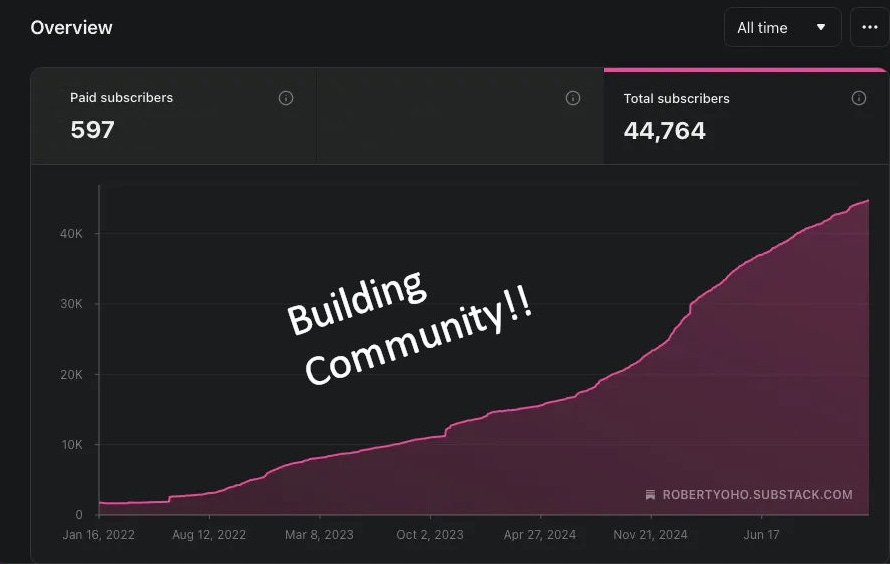
Parting shot #1: Where I have been
Parting shot #2: My anger management program
Captain America: “It might be time for you to get angry.”
Bruce Banner: “That’s my secret. I’m always angry.”


